

The Builders: Who Is Driving the Hunter's New Economy
By Andrea Hoymann | Hunter iF Board Director
This is part 3 of a four-part series on the Hunter Region's economic and cultural transition. The series explores the heritage that shaped the region, the transformation currently underway, the innovators driving it, and the question of what kind of place the Hunter wants to become.
Every regional transition story eventually has to answer the same question: who is actually doing the work?
In the Hunter, the answer is emerging from a cluster of companies, researchers and institution builders who are, with varying degrees of fanfare, constructing the economic infrastructure of whatever comes next.
Starting from the same soil
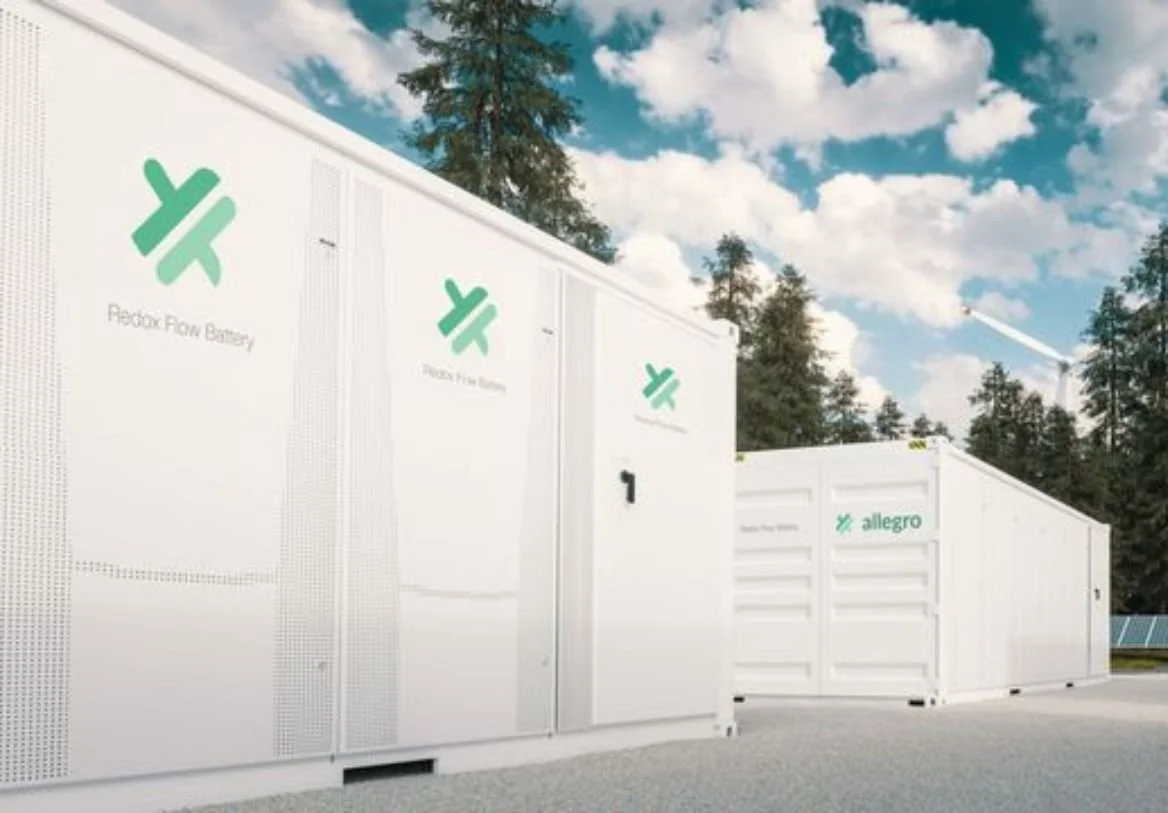
Allegro Redox Flow Battery
There is something worth noting about where many of the Hunter's most promising new energy ventures come from. Not from outside investment landing on a blank slate, but from the region's own industrial and research base.
MGA Thermal is a case in point. The Tomago-based company grew out of research at the University of Newcastle, co-founded by materials scientist Dr Erich Kisi. Its technology, miscibility-gap alloy thermal blocks that store energy as heat for industrial processes, was conceived in a regional university laboratory and is now backed by Shell, the Climate Venture Capital Fund and Main Sequence, with more than $28 million raised to date. The product is designed for exactly the kind of heavy industry the Hunter already has: aluminium smelting, chemical manufacturing, industrial steam. It does not require the Hunter to become something different. It requires the Hunter to do what it already does, more cleanly.
Allegro Energy, another University of Newcastle spin-out, is developing water-based redox flow batteries, a storage technology with no flammable electrolytes and a long operational life. Led by Dr Thomas Nann, the company raised $17.5 million in Series A funding in 2024, with Origin Energy among its investors. Its pilot deployment is planned for the Eraring power station site, the very coal infrastructure the Hunter is winding down.
3ME Technology, based in Cardiff, manufactures BLADEVOLT battery systems and electric powertrains for heavy mining and defence vehicles. While the mining industry debates its future, 3ME is already electrifying it from within, converting the underground loaders and surface vehicles that the industry runs on. Backed by the Clean Energy Finance Corporation and the Australian Business Growth Fund, it has secured contracts worth approximately $140 million.
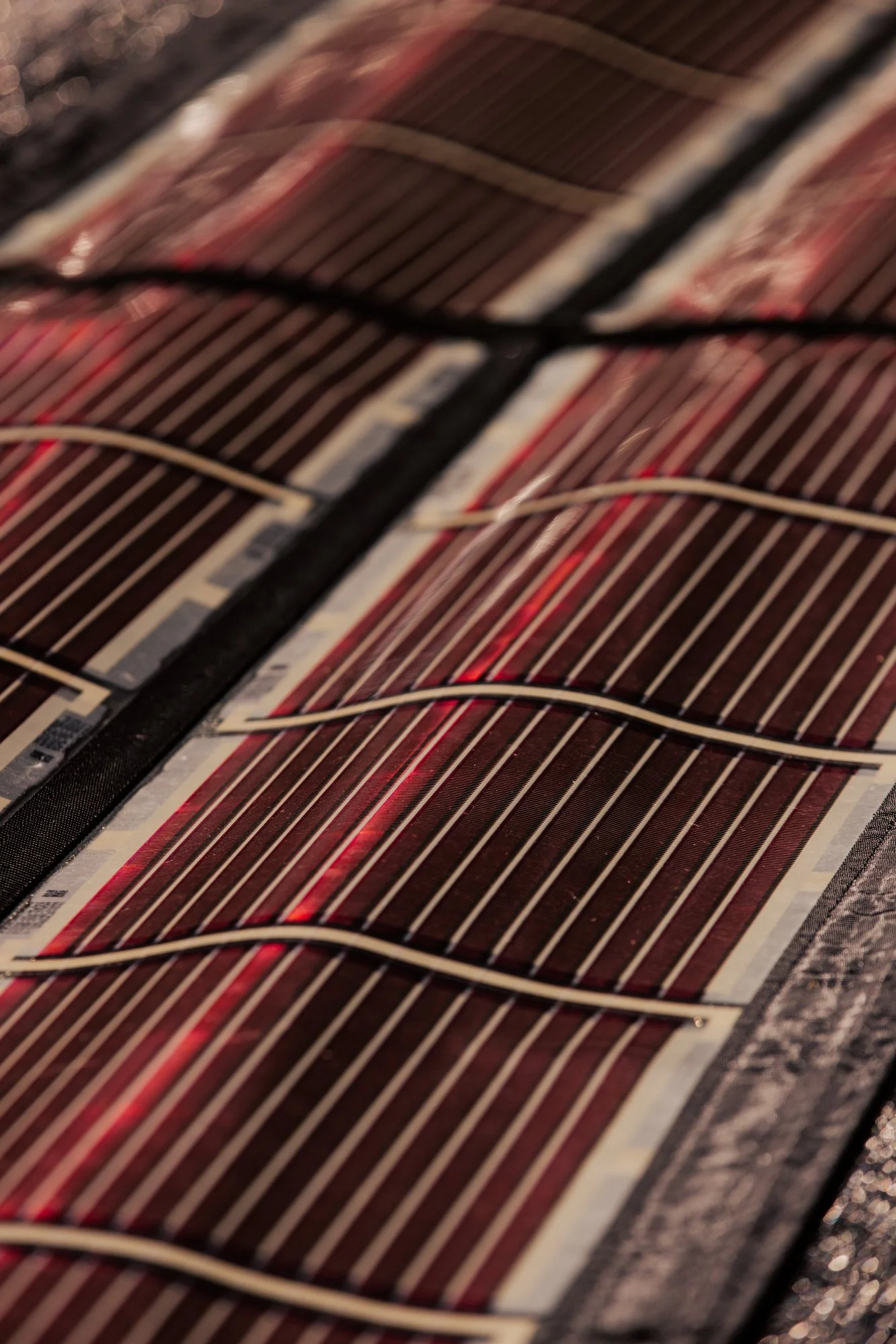
Kardinia energy printed solar.
Kardinia Energy, also a University of Newcastle spin-out, is doing something genuinely novel: printing solar panels. Its organic photovoltaic technology is printed roll-to-roll onto lightweight recyclable plastic at a fraction of the weight of conventional silicon panels, targeting the billions of square metres of industrial rooftop space globally that cannot bear the load of traditional solar arrays. With NSW and federal government grants secured and a commercial manufacturing facility planned for Shortland, Kardinia's panels have already appeared in an unlikely venue, powering stages on Coldplay's world tour.
These four companies are not the full picture. Across the region, a wider field of ventures is working on green ammonia catalysts, battery recycling, renewable hydrogen production, solar manufacturing and biotech. The cluster is broader and more varied than any single profile can capture.
The infrastructure behind the companies
None of this happens in isolation. Behind the companies is an ecosystem of institutions that has been assembling itself for the better part of a decade.
The University of Newcastle's I2N Cleantech Accelerator has been the primary pipeline, supporting founders from research concept through to investor-ready ventures. The TRaCE program, the Trailblazer for Recycling and Clean Energy, a $50 million federal investment shared with UNSW, extends that research-to-commercialisation pathway across the clean economy. Eighteen04, the region's longest-running startup incubator, has backed more than 80 companies since its founding and built the connective tissue between early-stage founders and the broader business community.
The Port of Newcastle, still widely thought of as the world's busiest coal export terminal, has repositioned itself as an active partner in the transition. Its Clean Energy Precinct on Kooragang Island, 220 hectares of brownfield land with deep-water access, existing grid connections and proximity to heavy industry, gives the Hunter an infrastructure asset that most regions attempting a clean energy transition would envy.
The University's New Energy Skills Hub, announced in March 2026 with $20 million in joint funding, addresses the workforce question directly: training the people who will build and operate the next generation of energy infrastructure, drawing on the same communities that have trained generations of workers for the mines and the steelworks.
What this adds up to

The Port of Newcastle, still widely thought of as the world's busiest coal export terminal, has repositioned itself as an active partner in the transition.
Individually, each of these companies and institutions is a promising data point. Collectively, they are something more: evidence that the Hunter's transition is grown from within by people who understand the region's industrial capabilities and are building on them deliberately.
I keep coming back to what the Ruhr Valley's transformation looked like from the inside. It was not driven by a single company or a single institution. It was the product of dozens of projects, across many years, by people who shared a conviction that the region's industrial identity was an asset, not a liability. That conviction did not make the hard years easier. But it meant the work had a direction.
The Hunter's builders share that conviction. The question the next piece takes up is whether the region can find the story that holds all of it together.
Next in this series: What Is the Brand Hunter? Lessons from Pittsburgh, Bilbao and the Ruhr on what post-industrial reinvention takes, and what the Hunter already has to work with.
Andrea is a Board Member of Hunter iF and the founder of Signal & Orbit, a fractional CMO and go-to-market consultancy based in Lake Macquarie. She has spent 15 years working across journalism, media and B2B marketing strategy in Germany and Australia.