

The Weight of the Past: What Coal and Steel Built in the Hunter
By Andrea Hoymann | Hunter iF Board Director
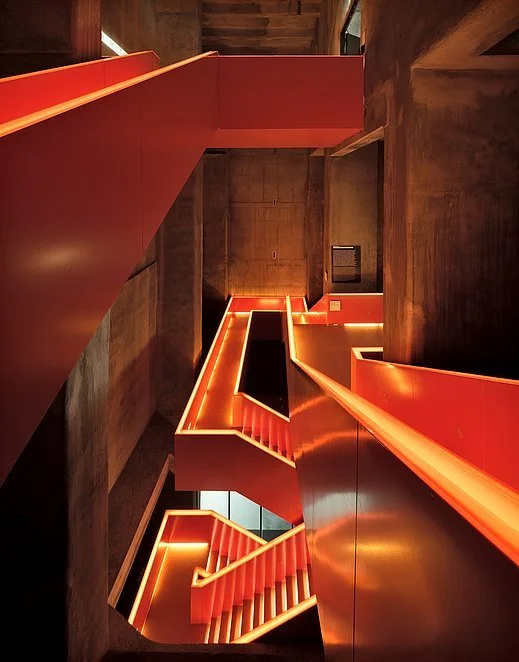
UNESCO World Heritage Site, Ruhr Museum
This is part 1 of a four-part series on the Hunter Region's economic and cultural transition. The series explores the heritage that shaped the region, the transformation currently underway, the innovators driving it, and the question of what kind of place the Hunter wants to become.
When we were kids, my family made the annual trip to the Baltic Sea for our summer holiday. When people learned where we were from, they'd joke with my sisters and me about whether we were enjoying finally being able to see the blue sky.
We never got the joke.
As far as we were concerned, the sky at home had always been blue. The structural change of Germany's Ruhr Valley was well underway by the early 1990s, and we had no memory of the coal dust and smoke that had once defined it. The grimy image people associated with our home was already history by the time we were old enough to notice it.
I grew up in the Ruhr Valley, Germany's industrial heartland, and watched that region spend decades reconciling a similar image of itself. The lesson I carried to Newcastle was not about coal or climate policy. It was about what happens to a community when the thing that gave it meaning begins to disappear.
In the Hunter, that reckoning has arrived.
Forged in steel
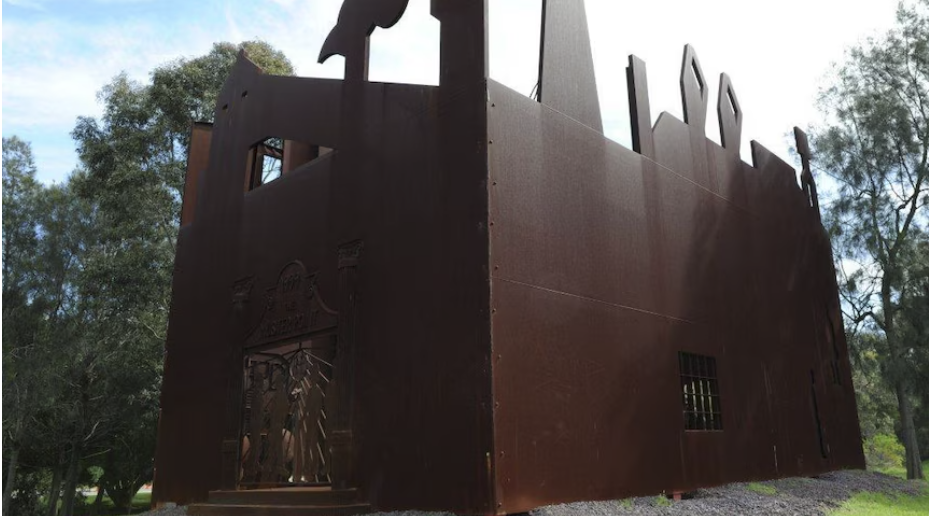
The Muster Point, a 70 tonne steel structure, was built to mark the closure of the steelworks in 1999. (Supplied by Aubrey Brooks)
When BHP closed the Newcastle Steelworks in September 1999, roughly 2,000 workers and 1,000 contractors walked out the gate in a single day. What followed was not just unemployment, it was the severing of a lineage.
Aubrey Brooks, a former BHP worker, put it plainly when speaking about the Muster Point Memorial erected on the former steelworks site: “My grandfather started there in 1915 and he worked there for 37 years. Dad worked there for 42, I worked there for 3, that's 125 years service with the company.” Three generations, one gate, one morning.
That kind of compressed biography is not unusual in the Hunter. It repeats across the coalfields. In Cessnock, Maitland, Singleton and Muswellbrook, the mines offered not just employment but a social grammar: a way of speaking, of building trust, of measuring a life well lived. Weston resident Ron Peters, now 90, recalls growing up in Cessnock when the South Maitland coalfield ran 28 pits and employed 11,000 workers. “That's all there was”, he said simply. He did not mean that as a complaint.
This is the culture that coal and steel created in the Hunter. It was not incidental to the economy. It was the economy, and the economy was the identity.
Underneath the coal
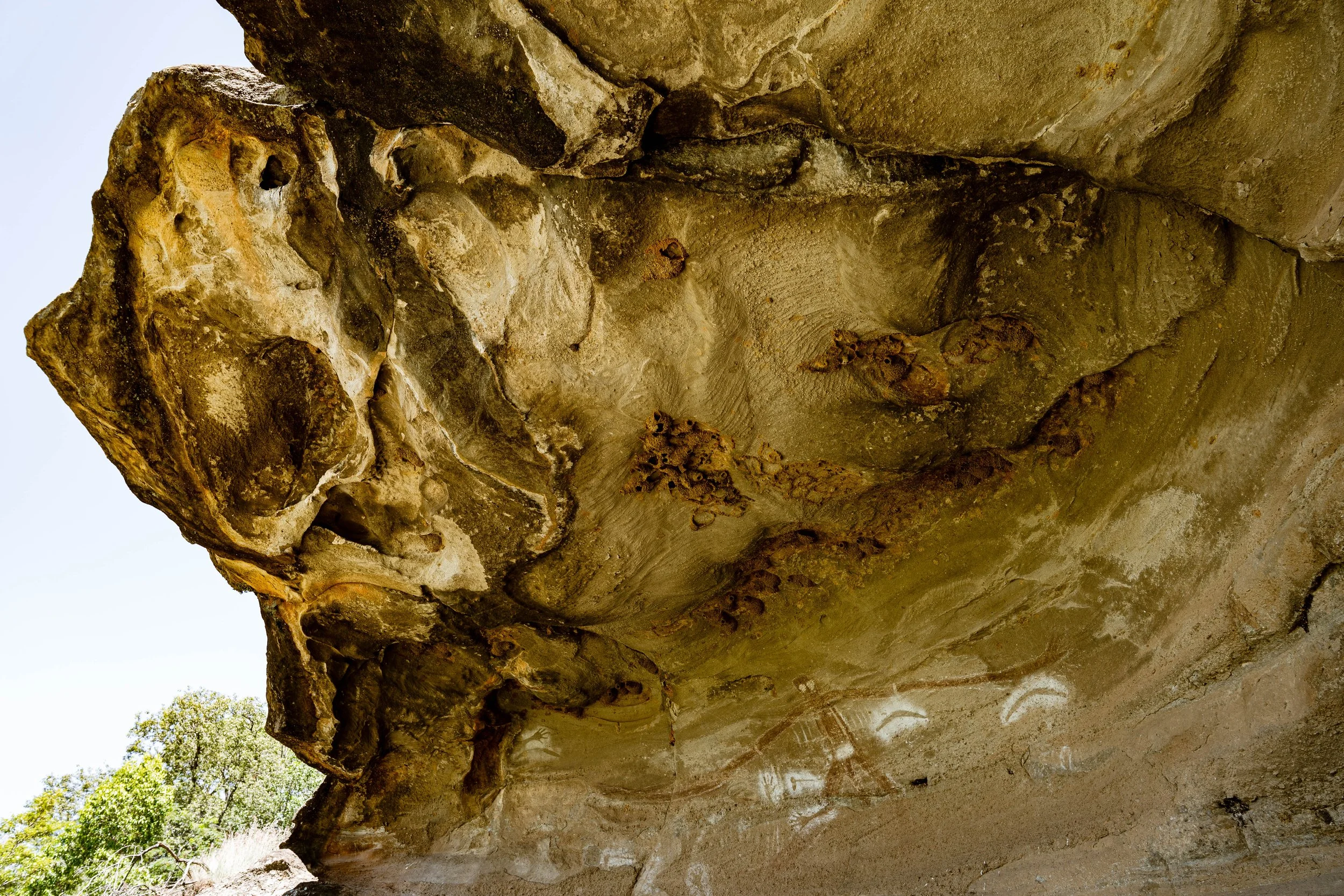
Baiame Cave is a heritage-listed cave and cultural site of the Wanaruah, Wonnarua People
What the industrial narrative has too often obscured is that the Hunter's identity does not begin in 1804, or 1915, or at the opening of any mine.
The Wonnarua people are the Traditional Custodians of the Upper Hunter, the very country through which the coalfields run. The Worimi people are the Traditional Custodians of Port Stephens. The Awabakal people hold Country across Newcastle and Lake Macquarie. The Darkinjung people's Country extends south. These are not footnotes to the industrial story. They are the ground beneath it, literally and culturally.
Baiame Cave, near Milbrodale in the Upper Hunter, holds one of the most significant examples of Aboriginal rock art in NSW. Baiame, the Creator Spirit central to the Dreaming traditions of many nations across eastern Australia, is depicted there in a painting estimated to be thousands of years old. It sits within what became coal country. That proximity is not a coincidence to be glossed over. It is an invitation to understand what was already here, and what was taken for granted in the rush to extract.
Conservationist and writer Georgina Woods has noted that even before European settlement, coal was part of the lives and stories of the Awabakal people of Newcastle and Lake Macquarie. The resource that built the industrial Hunter was known to its First Peoples long before it was exported through the world's busiest coal port.
Today, the Wonnarua Nation Aboriginal Corporation conducts cultural heritage assessments for major mining companies operating on Wonnarua Country. The relationship is complicated: Aboriginal heritage is being mapped and documented, in part, through the very industry that has damaged it. That tension belongs in any honest account of the Hunter's past.
What identity is made of
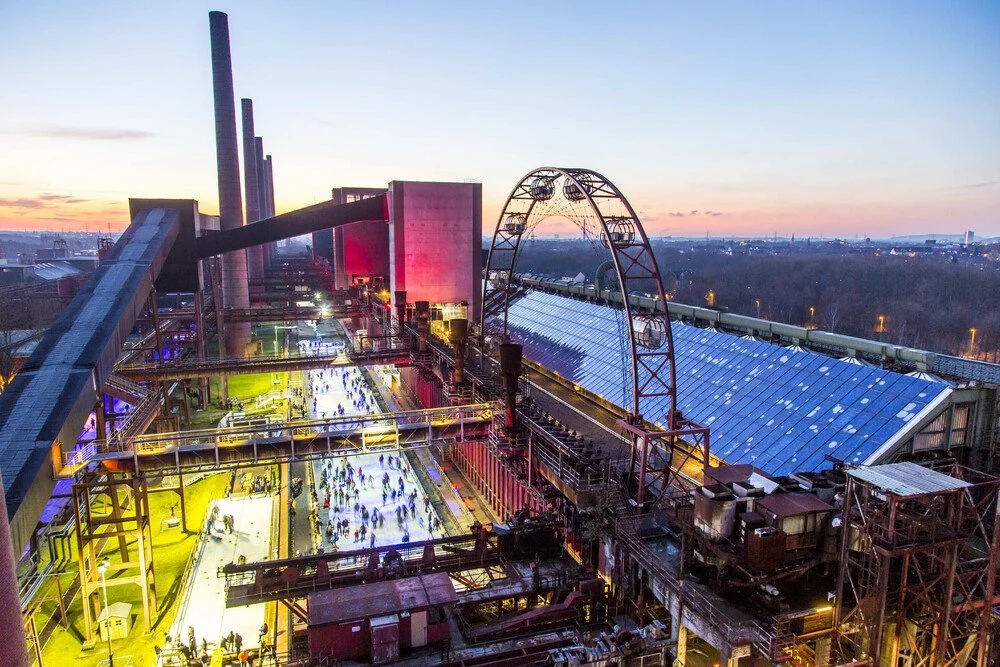
UNESCO World Heritage Site: Zollverein Coal Mine Industrial Complex in Essen (Eisbahn auf der Kokerei)
In the Ruhr Valley, the end of coal did not erase what coal had built. Zollverein, once an operational mine complex, is now a UNESCO World Heritage site and a venue for concerts and art exhibitions. The region let go of its industry while holding on to the heritage that shaped its people.
The Hunter has its own version of that heritage. The Muster Point Memorial. The murals of Kurri Kurri, painted as the town began to look for a new story in the late 1990s. The South Maitland coalfields, where the industry was not just economic infrastructure but the connective tissue of entire communities.
These things matter not as nostalgia, but as material. A region that does not know what it was cannot decide what it wants to become. And the Hunter, standing at the most significant economic transition in its history, needs to know exactly what it is carrying forward.
The weight of the past is not a burden. In the right hands, it is the foundation.
Next in this series: The Reckoning: Where the Hunter's energy transition currently stands, and why the story is more complicated than the headlines suggest.
Andrea is a Board Member of Hunter iF and the founder of Signal & Orbit, a fractional CMO and go-to-market consultancy based in Lake Macquarie. She has spent 15 years working across journalism, media and B2B marketing strategy in Germany and Australia
