

Clustering is the Hunter’s Golden Ticket
By Zara Crichton, CEO of Hunter iF
The dust is finally settling on the Federal Government’s Strategic Examination of Research and Development Final Report, "Ambitious Australia" (March 2026). While the media focuses on the top-line figures, those of us on the ground in Newcastle and the Hunter Valley see a much more profound shift in the wind.
The report’s message is clear: Australia’s R&D system has been too fragmented for too long. We have been measuring activity instead of impact. But for the Hunter, there is one recommendation that stands above the rest as our roadmap for the next decade - the move toward formal, place-based Industrial Clusters.
The Power of the Cluster
For years, Hunter iF has championed the idea that innovation doesn't happen in a vacuum. It happens in the "connective tissue" between a startup, a world-class university, and a heavy-industrial port. The Ambitious Australia report finally codifies this, advocating for R&D that is "mission-led" and "cluster-centric."
In the Hunter, we have the ecosystem. But to capture global markets, we must move beyond being a collection of individual success stories. We need to become a "Super Cluster." This means shifting our mindset from isolated R&D projects to joint ventures that combine our regional strengths in green hydrogen, sovereign manufacturing, and digital tech.
The Vision of Roy Green
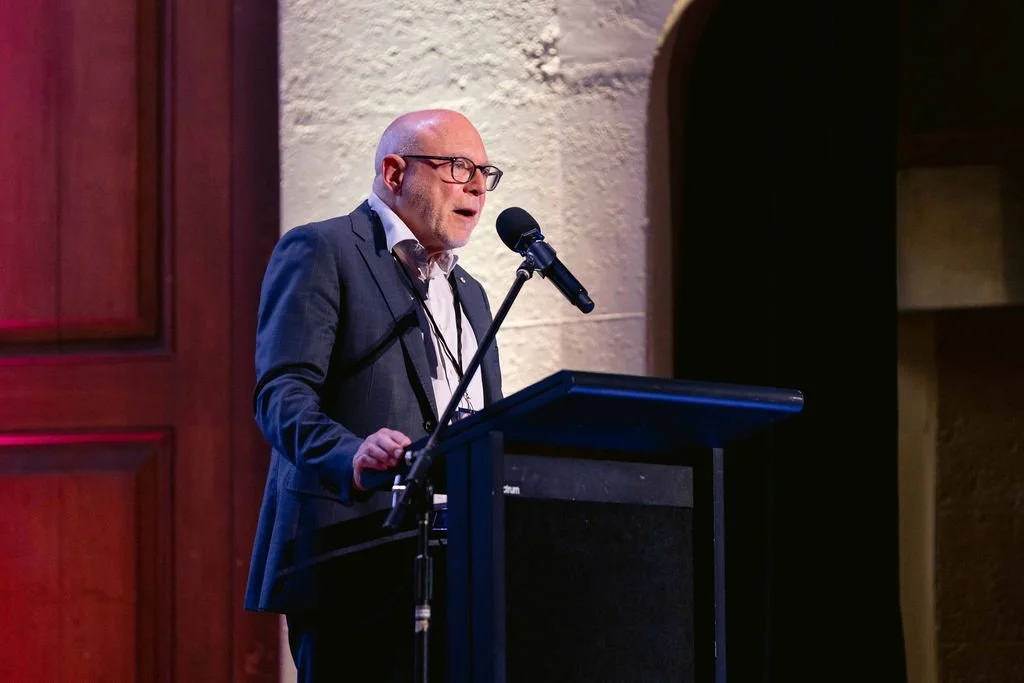
Emeritus Professor Roy Green AM at the 2025 Hunter Innovation Festival
This shift isn't a surprise to us. We’ve had a front-row seat to the leadership of Emeritus Professor Roy Green AM. As many of you know, Roy’s influence on the Hunter and his enduring role with the Hunter Innovation Festival have been instrumental in preparing our region for this exact moment.
Roy has long argued that Australia is at a "productivity crossroads." He has been the loudest voice calling for the very "policy architecture" this report now recommends. His recent Energy Industry Jobs Plan Review (March 2026) for the Net Zero Economy Authority further emphasises that the Hunter is the "litmus test" for a Future Made in Australia.
Roy’s previous roles (Chair of Port of Newcastle, CSIRO Board, ARM Hub) are cited as models for the collaborative leadership" the report calls for, where infrastructure (the Port), research (CSIRO/Universities), and industry (Manufacturing hubs) operate as a single ecosystem.
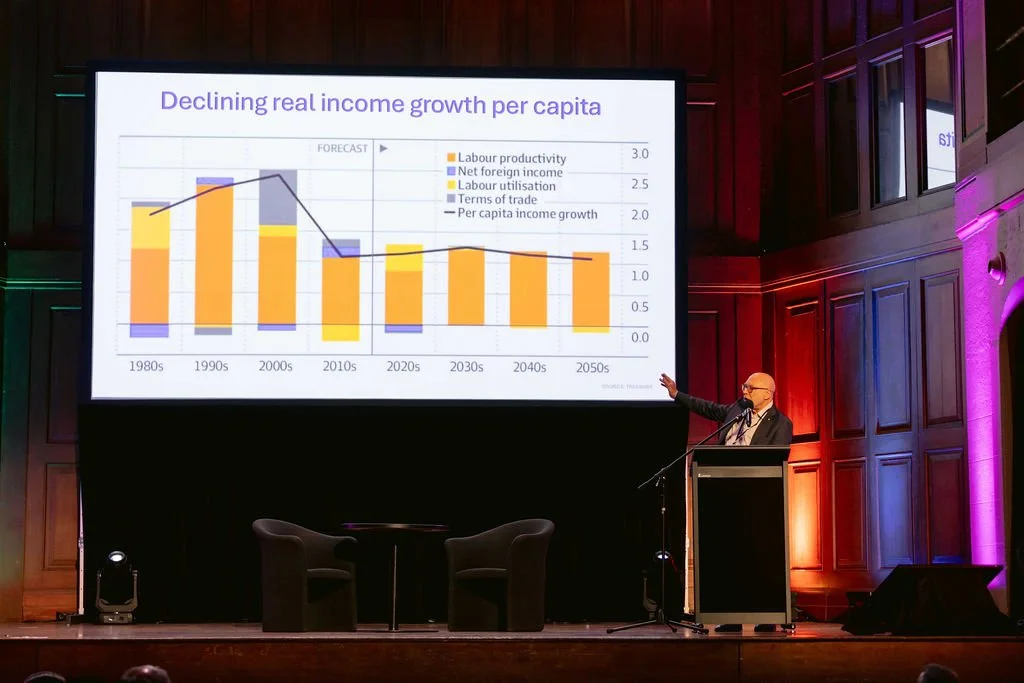
Emeritus Professor Roy Green AM at the 2025 Hunter Innovation Festival
The Challenge: A New Era of Joint Venturing
The report is the "what." Now, we—the Hunter business community—must provide the "how."
The era of the "lone wolf" innovator is over. If we want to capture global markets, our challenge is to rethink how we collaborate. We need to be bolder in our approach to Joint Venturing. Whether it’s SMEs sharing R&D costs to solve a common supply chain hurdle, or tech startups co-locating with traditional engineering firms, the "Hunter Way" must become synonymous with radical collaboration.
We see this already through the Trailblazer for Recycling and Clean Energy (TRaCE)—a partnership between the University of Newcastle and UNSW that is literally moving tech "out of the lab and into manufacturing."
The report also proposes bold reforms to the R&D Tax Incentive (RDTI), moving away from broad compliance and toward rewarding "high-growth" firms and "corporate citizens" who anchor these innovation ecosystems.
Our Call to Action
We have the Port of Newcastle’s 2030 Strategy as our gateway. We have the Hunter iF Innovator Series as our forum. The Ambitious Australia report provides the strategic cover. Now, it is up to us to build the clusters that will turn local ideas into global exports.
My challenge to you is this: Don’t just look for a customer for your next innovation. Look for a partner. Let’s build the joint ventures that make the Hunter's presence felt in every corner of the global net-zero economy.
The future isn't just "Made in Australia." If we get this right, it’s Made in the Hunter.
Key Takeaways for Hunter iF & the region
Mission-Led Industrial Policy
The report advocates for R&D that aligns with national strategic priorities—specifically net-zero transition and sovereign capability. This directly supports Newcastle’s ambitions to become an sustainable energy hub. The focus is no longer just on university discovery, but on "mission-oriented" R&D that solves industrial challenges.
Focus on SMEs and Advanced Manufacturing
A major theme is the need to support SMEs in accessing R&D. The report suggests that the current R&D Tax Incentive (RDTI) may be refined to prioritise "high-growth companies" and "commercialisation trajectory" rather than just technical eligibility. For the Hunter’s growing ecosystem of tech startups and engineering firms, this means a likely increase in support for R&D that leads to scalable, exportable products.
Strengthening Regional Translation
The report recommends the creation of Translational Research Partnerships. For Newcastle, this reinforces the importance of the University of Newcastle’s (UoN) role in working with local industry (e.g., through the Trailblazer Recycling and Clean Energy program). It calls for breaking down the "cultural divide" between academia and business—a core mission of Hunter iF.
Workforce and Skills
There is a heavy emphasis on building a workforce with "commercial acumen" alongside STEM skills. The report argues that for a "Future Made in Australia," the workforce must be equipped to bring innovations to market, not just develop them in a lab.
Stay tuned for the upcoming Hunter Innovation Festival, where we will be diving deep into these R&D reforms and what they mean for your business.
