

From Deep-Sea to Deep-Tech
The Hunter's Blue Economy Moment Has Arrived
By Andrea Haymann
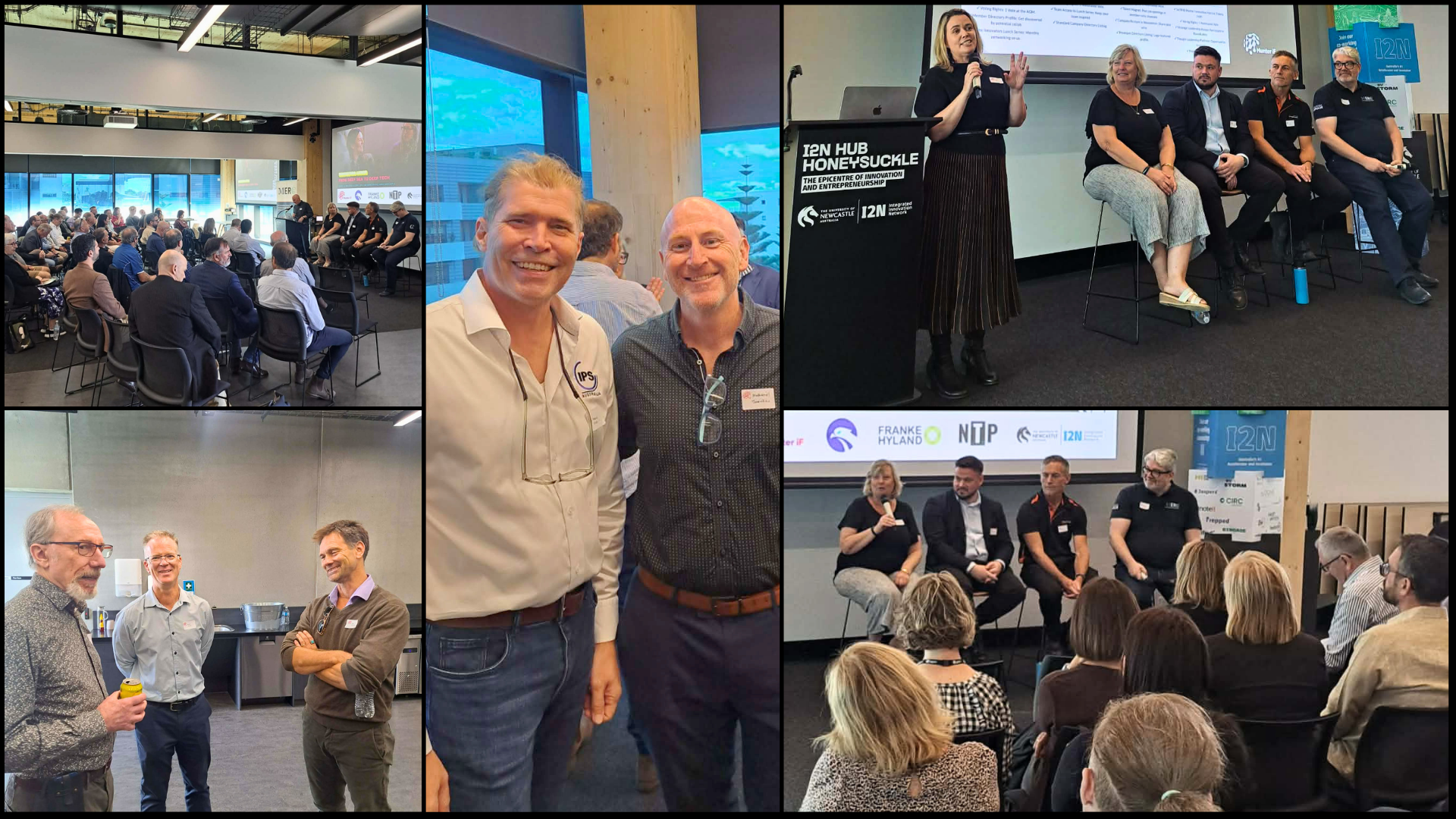
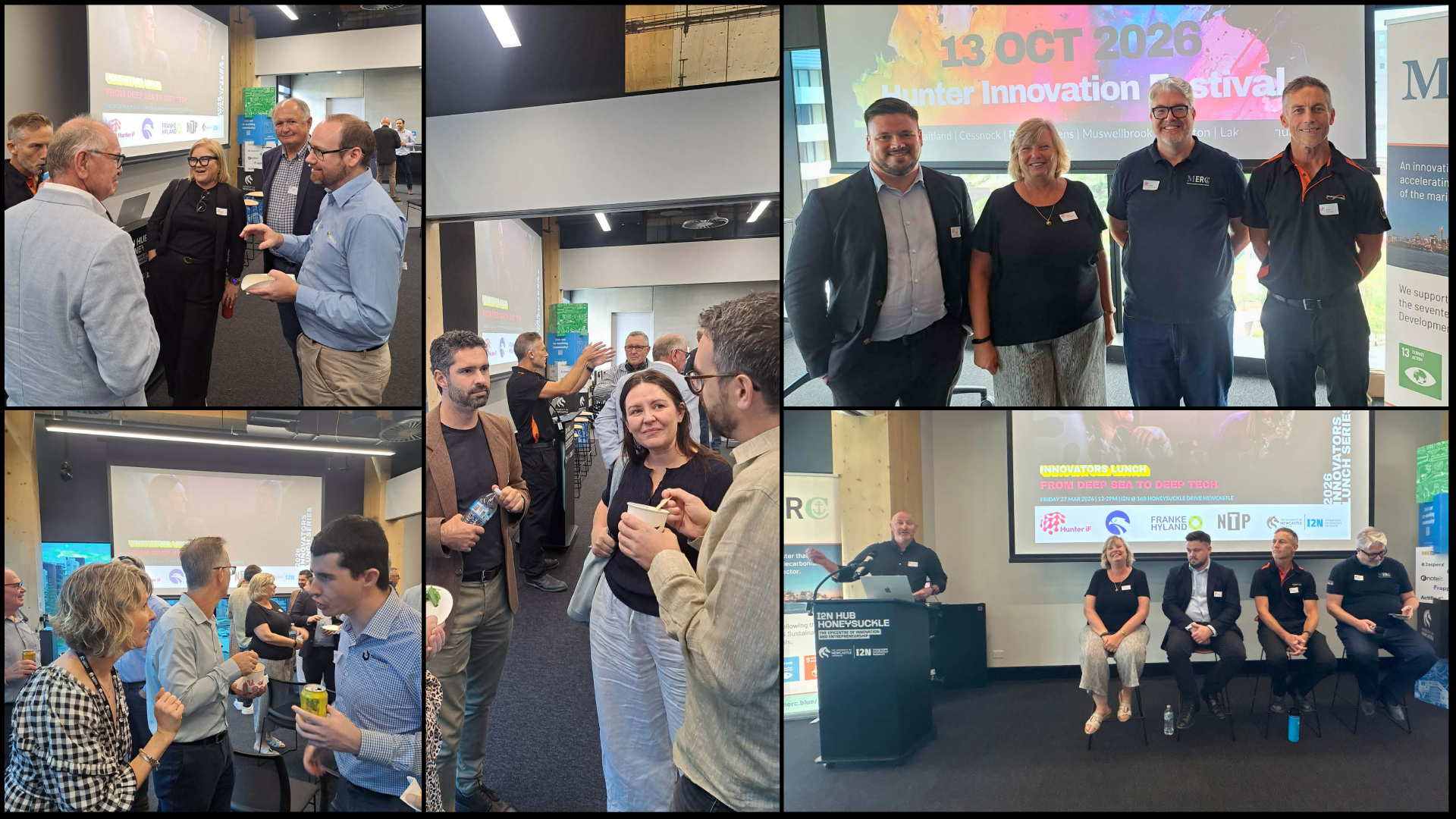
The March Hunter iF Innovators Lunch brought together some of the most compelling voices in Australian blue tech to ask a simple question: is the Hunter ready to seize this moment?
The Blue Economy Is Coming to Newcastle: Ready or Not
The Hunter has always had a relationship with the sea. Shipbuilding, port operations, commercial fishing, defence; the maritime heritage runs deep. But what's emerging now is categorically different in scale and ambition. The global blue economy is electrifying, automating, and digitising at pace, and Australia's defence posture is accelerating that shift with investment that hasn't been seen in a generation.
Angus McDonald of MERC Asia Pacific framed the opportunity with a mix of historical perspective and urgency. The Hunter was once a shipbuilding hub. It can transition again, this time into containers, commercial electrification, and defence systems, but only if the region moves deliberately to attract the industry back. He pointed to the closure of Glebe Island's marine facilities in Sydney as a moment that creates a genuine opening on the eastern seaboard, one that the Hunter is positioned to fill if it acts now.
The vision McDonald articulated was concrete: a maritime innovation precinct modelled on the Boat Works on the Gold Coast, where up to 1,000 people work daily across everything from vessel servicing to deep-tech startups. "Attach an innovation hub to get new tech on boats," he said, "and you create something genuinely rare. A place where technology can be conceived, tested, refined, and commercialised without leaving the region."
Fiona Sutherland of Fibre Boats gave the room a ground-level view of what that ambition looks like in practice. Her company is developing an electric hydrofoiling sailboat delivering fossil-fuel-comparable range at 22 knots, built from lightweight carbon fibre composites. The technology works. But right now, components are being sourced from Nowra, Western Australia, and beyond, simply because the local infrastructure isn't there yet. "I'd like to build it here in the Hunter," she said, "but we're lacking the infrastructure." Her goal is to consolidate manufacturing in the region as the business scales from recreational to commercial vessels, and the opportunity for the Hunter is to become the place that makes that consolidation possible.
Her other point landed equally well: there's no need to start from scratch. Canada and Sweden have already built world-class electric marine ecosystems. The research has been done, the models have been tested, and the lessons are available to anyone willing to look. The Hunter doesn't need to invent the playbook. It needs to run it faster than anyone else.
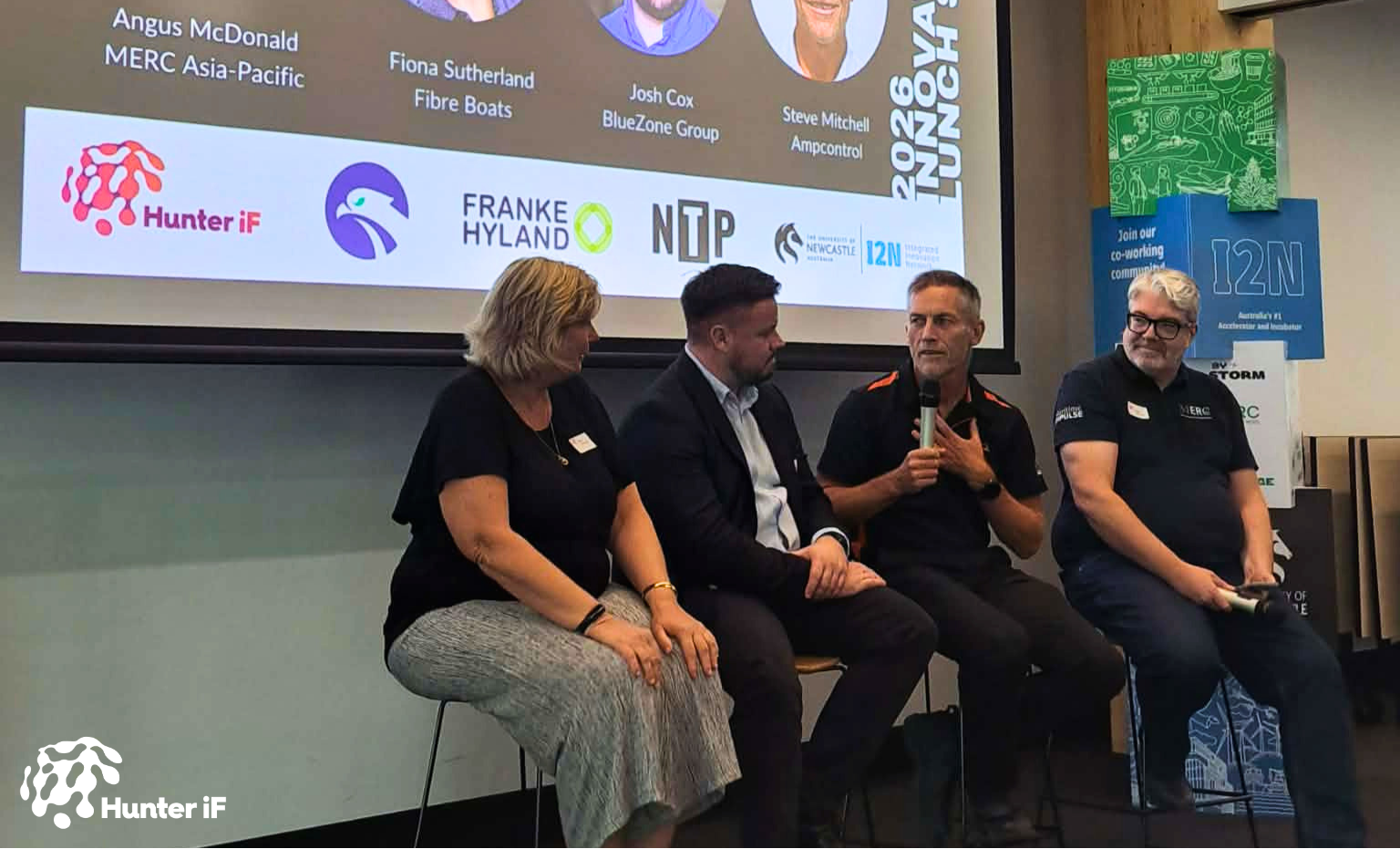
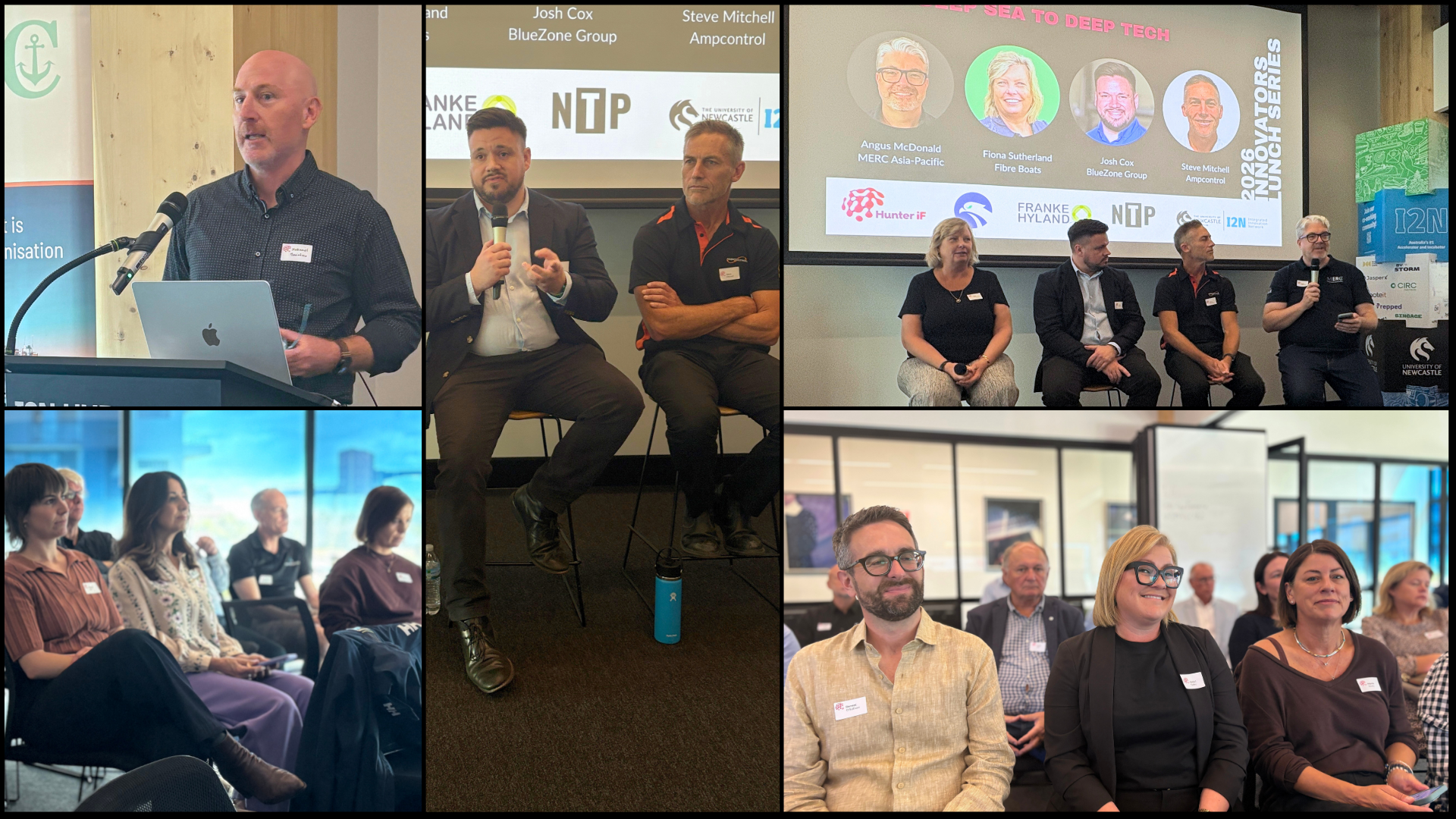
(left to right) Fiona Sutherland, Josh Cox, Steve Mitchell & Angus McDonald
Regulation: The Necessary Friction That Could Become a Competitive Advantage
If there was a consistent undercurrent of frustration in the room, it was around regulation, but the most sophisticated voices were careful to distinguish between regulation as a barrier and regulation as a market signal.
McDonald acknowledged the tension directly. The Australian Maritime Safety Authority (AMSA) has an important job: keeping vessels safe, protecting marine environments, and ensuring operators are trained and accountable. But in a period of rapid technological change, regulatory frameworks designed for an earlier era can significantly slow the adoption of innovation. For a startup trying to prove a concept, that friction can be existential.
Josh Cox of BlueZone Group, whose company services deep-sea autonomous systems for environmental monitoring and defence applications, brought a practitioner's perspective to the regulatory conversation. His team recently navigated the challenge of bringing new unmanned vessel technology into Australia, requiring exemptions that were neither fast nor straightforward. Beyond the import hurdles, he described the layered complexity of designing for an environment that is fundamentally unforgiving. Pressure, temperature, corrosion, acoustic communication limits, and what Cox described with as "things you simply can't design for," including autonomous underwater vehicles being attacked by sharks. In the ocean, regulatory compliance and physical resilience aren't separate problems. They're the same problem.
Steve Mitchell of Ampcontrol added the commercial electrification dimension. Getting an electric vessel approved through AMSA currently adds significant cost and time to an already capital-intensive process, a 30–40% cost premium over diesel equivalents before you even account for regulatory approval timelines. For commercial operators like fishermen already working on thin margins, that premium is a dealbreaker without external support.
But here's the reframe that resonated: businesses that develop genuine expertise in navigating these pathways don't just survive the friction, they build a moat. Marine-specific safety certification, AMSA compliance knowledge, and operator training capability are high barriers to entry. For Hunter-based businesses willing to invest in that expertise, the regulatory complexity that frustrates others becomes a source of durable competitive advantage.
There's also a powerful policy lever the room coalesced around. Mitchell's provocation was direct: what would it look like if the government mandated that no new marine service tenders (harbour ferries, police vessels, rescue boats) could be diesel-only? "Try to electrify everything," he said. "No more tenders for anything that's not at a minimum a hybrid." The modelling is compelling: emissions reductions of up to 50% in targeted waterways by 2030, quieter harbours, cleaner beaches, better air quality. And critically, a consistent demand signal that allows local manufacturers to invest in scale, reduce unit costs, and compete on commercial terms. Markets often need a mandate before they can find their momentum.
Understanding the Value Chain: Where Australian Businesses Actually Win
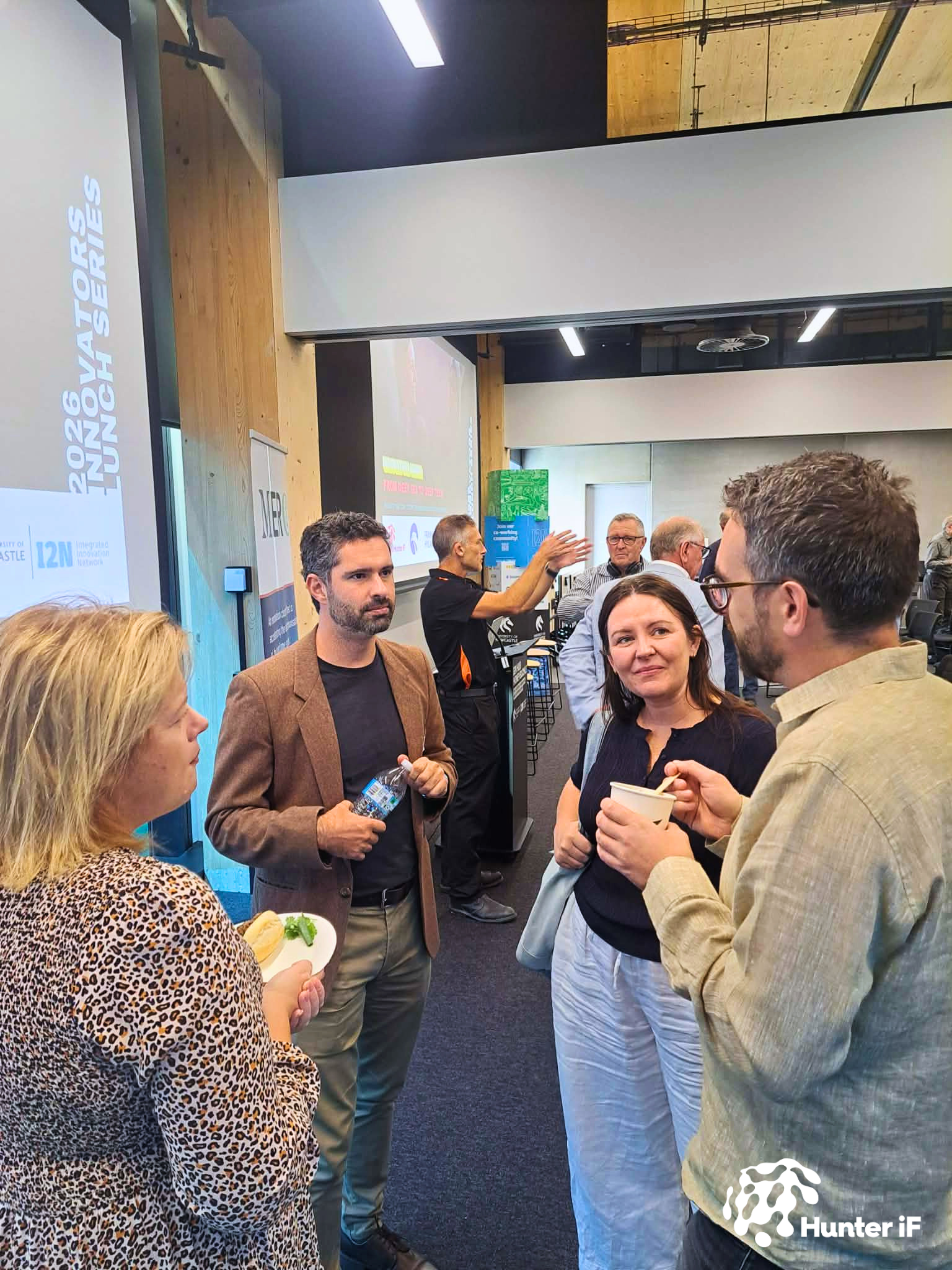
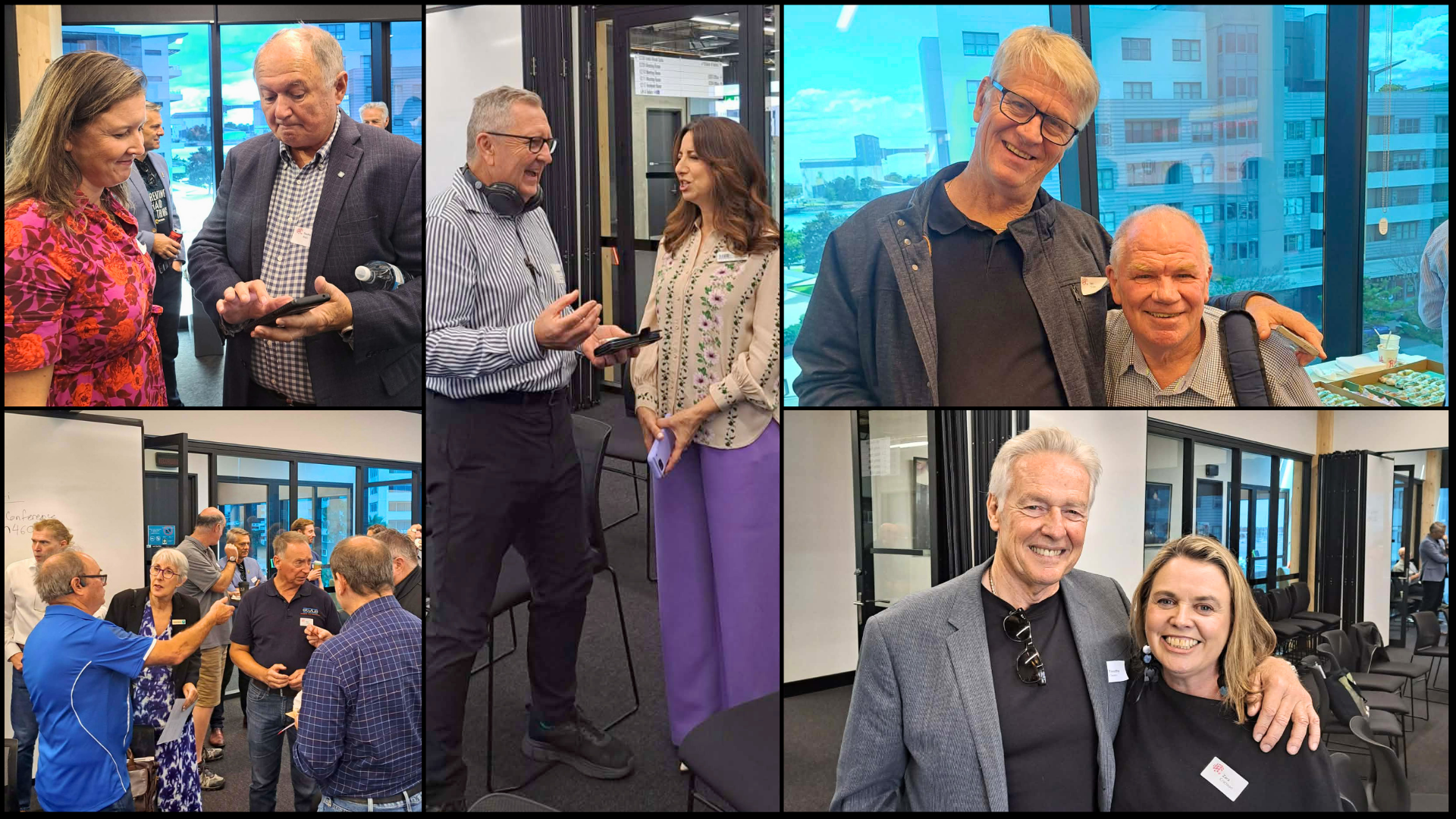
Cameron Pelling, Cecelia Hanlon & Hunter iF community
Perhaps the most practically valuable conversation of the afternoon was about supply chain reality, specifically, what Australian businesses should and shouldn't try to own.
Mitchell was characteristically direct on this point. Ampcontrol isn't building boats. They're building the power systems and integration expertise that go into them. And that distinction is the whole strategy. "The set-up cost for making batteries from scratch is multiple billions of dollars," he said. "It's very difficult for us to do here." Reliance on international battery cell manufacturing, particularly from China, is simply a reality of the current market. Trying to compete at that level of vertical integration isn't a regional strategy, it's a distraction from where Australian businesses can genuinely win.
That winning ground, as Mitchell described it, is one level up: sophisticated integration. Taking world-class global components and wrapping them in Australian software, Australian safety certification, and Australian marine-specific expertise. "The barriers of entry are actually good for us," he noted. "They mean we can be competitive." Licensing those integration solutions to other builders, domestically and eventually internationally, is how regional impact compounds beyond any single product or contract.
Cox reinforced the same logic from the autonomous systems side. BlueZone's approach is to bring technology in and integrate it into existing systems, rather than attempting to design and manufacture everything from the ground up. The value isn't in owning the component, it's in knowing how to make it work reliably in one of the world's most demanding operating environments, in compliance with Australian regulations, and with the end-user's operational reality front of mind. "Consider the hand-off internally," he advised. "The end-user is a key consideration for designing products going into the ocean."
For businesses in the room from engineering, advanced manufacturing, and software, this reframes the central question from "can we build it?" to "can we integrate it better than anyone else?" The answer, for Hunter businesses with the right focus, is yes.
What unlocks that potential, Cox and McDonald both argued, is targeted infrastructure investment. A world-class battery testing and sustainable maintenance facility. A local data farm connected to AI development infrastructure that can accelerate design iteration cycles. A marine precinct with boat lift and shed capacity that lets commercial operators and startups share services and proximity. These aren't glamorous investments. But they are the ones that determine whether the region can attract and retain the companies that matter, and whether businesses like Fibre Boats can consolidate their supply chains here rather than continuing to distribute them all around the country.
As McDonald put it, the model already exists. The Boat Works on the Gold Coast demonstrates what happens when you cluster the right infrastructure, the right services, and the right businesses in one place. The Hunter has the geography, the heritage, and now the defence contracts to do the same thing.
The Hunter iF Innovators Lunch series brings together innovators, industry leaders and change-makers from across the Hunter Valley every month. If you'd like to be part of the conversation, become a member or follow us on LinkedIn.