

What Is the Brand Hunter?
By Andrea Hoymann | Hunter iF Board Director
This is part 4 of a four-part series on the Hunter Region's economic and cultural transition. The series explores the heritage that shaped the region, the transformation currently underway, the innovators driving it, and the question of what kind of place the Hunter wants to become.
Every city eventually has to answer the question it has been avoiding.
For Pittsburgh, it came in the 1980s when 150,000 manufacturing jobs disappeared in a decade and the population fell by nearly 200,000 people. For Bilbao, it came earlier, a Basque industrial city watching its shipyards and steelworks hollow out, its river running with the residue of industries that were no longer viable. For the Ruhr Valley, where I grew up, it was a slower reckoning: decades of managed decline, rising unemployment, and a region struggling to shed an image it had not earned for thirty years.
Each of those places eventually found a new story. The question the Hunter is now asking, whether consciously or not, is what its story will be.
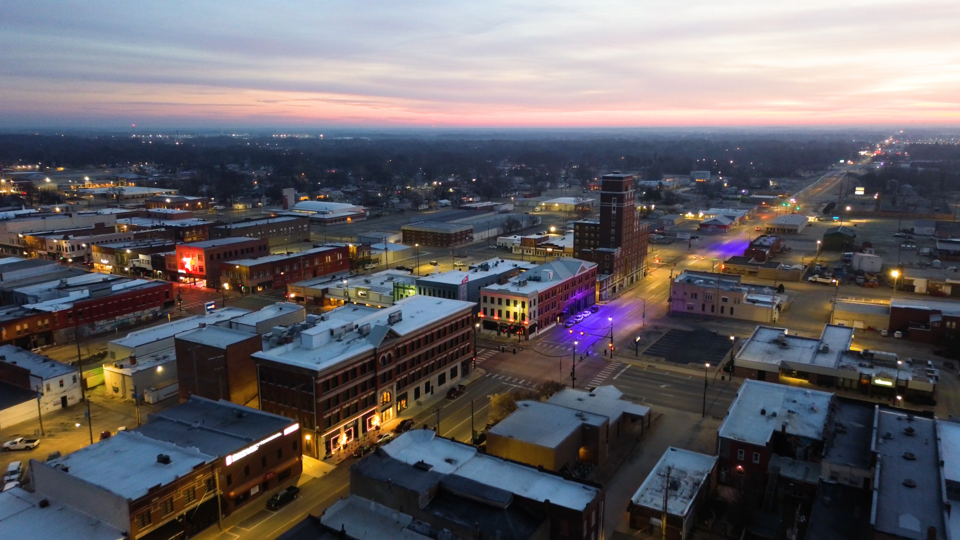
Downtown Pittsburgh, Pennsylvania.
What the case studies actually teach
The cities that successfully reinvented themselves after heavy industry share some characteristics that are easy to romanticise and harder to replicate.
Pittsburgh is the most cited example, and for good reason. The collaboration between Carnegie Mellon University, the University of Pittsburgh and the Allegheny Conference produced a genuine transformation, from steel city to a hub for medicine, education and, increasingly, robotics and artificial intelligence. The Pittsburgh Technology Center and the Hot Metal Bridge, both built on former mill sites, are powerful symbols of that reinvention. But economist Chris Briem, who has studied the region for decades, is careful to note that the rebrand was uneven. The core city thrived. Aliquippa, Clairton and Braddock, the peripheral towns where the mills once stood, did not. Pittsburgh's lesson is not simply that reinvention is possible. It is that reinvention without deliberate geographic equity produces winners and leaves others behind.
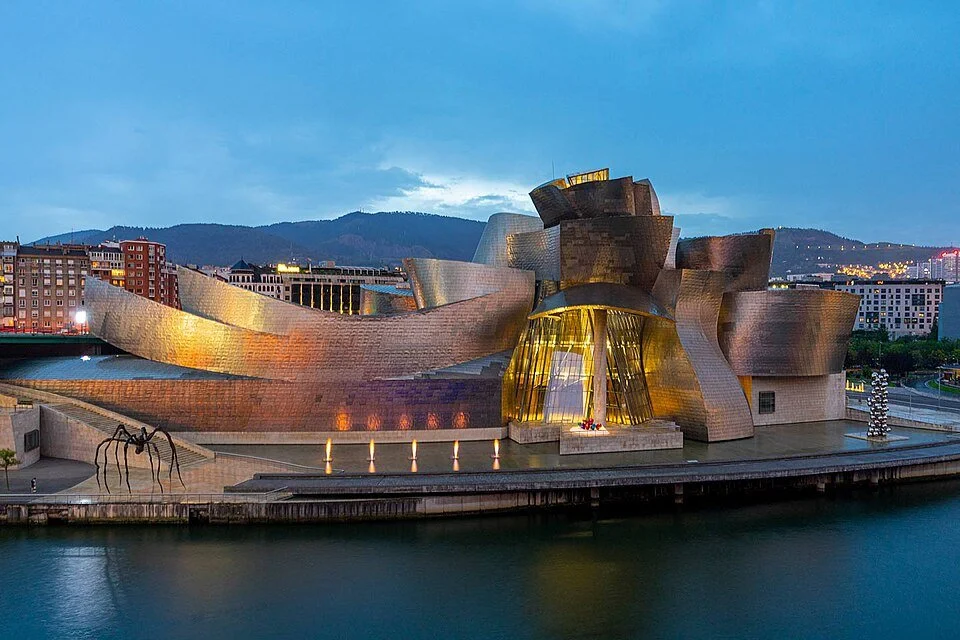
Guggenheim Museum Bilbao
Bilbao's story is often reduced to the Guggenheim Museum, the Frank Gehry building that opened in 1997 and became global shorthand for cultural regeneration. But the building only worked because of what surrounded it: the Bilbao Ría 2000 urban regeneration authority, a new metro system, a cleaned-up waterfront, and two decades of sustained public investment. By 2023, the museum alone was contributing over €650 million annually to the Basque economy. So, the conclusion is not that a landmark building transforms a city. It is that a landmark building, embedded in a long-term governance structure with real funding behind it, can become the visible expression of a transformation that was already underway.
The Ruhr Valley's IBA Emscher Park program is perhaps the most instructive model for the Hunter, precisely because it was not built around a single icon. Ten years, 120 projects across 17 cities, converting collieries into landscape parks, concert venues, climbing walls and design schools. I spent weekends clubbing in those spaces in my early twenties, long after the industrial sites had closed, and what struck me was not the architecture. It was how normal it felt to be proud of where you came from, even as the economy that had produced that pride was disappearing. The program gave people permission to feel that. The Zollverein coal mine complex, now a UNESCO World Heritage site, is the most famous result. But the lasting contribution was something less photographable: a shared regional narrative that held.
What the Hunter already has
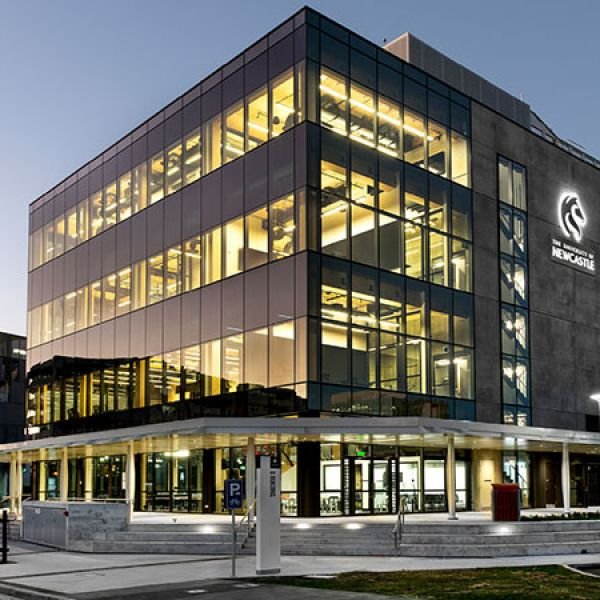
The I2N Hub Honeysuckle is housed inside the Q Building, a $25 million architectural masterpiece designed by EJE Architecture. It stands out as a world-class icon of sustainability
The Hunter is not starting from scratch. It has the University of Newcastle's research and commercialisation ecosystem, the I2N and TRaCE pipelines producing genuine deep-tech ventures, and Eighteen04's decade of company building. It has the Port of Newcastle's Clean Energy Precinct on 220 hectares of Kooragang Island brownfield. It has the Hunter 2050 Foundation, established by Hunter Joint Organisation, with a blueprint for regional diversification and a mandate from local councils. It has the Hunter Jobs Alliance articulating the workforce transition case with rigour and persistence. And as the previous pieces in this series have described, it has a cluster of companies in thermal storage, battery technology, solar manufacturing and grid software that are already operating, already funded, and already building on the region's industrial capabilities.
What it does not yet have is the story that holds all of this together. The parallel narratives, steel heritage, coal country, wine tourism, university city, future energy precinct, cleantech cluster, exist side by side without a civic spine connecting them.
The story that predates the story
There is a version of Brand Hunter that starts with the steelworks, or the coalfields, or the Port. It is a compelling story. It is also not the whole one.
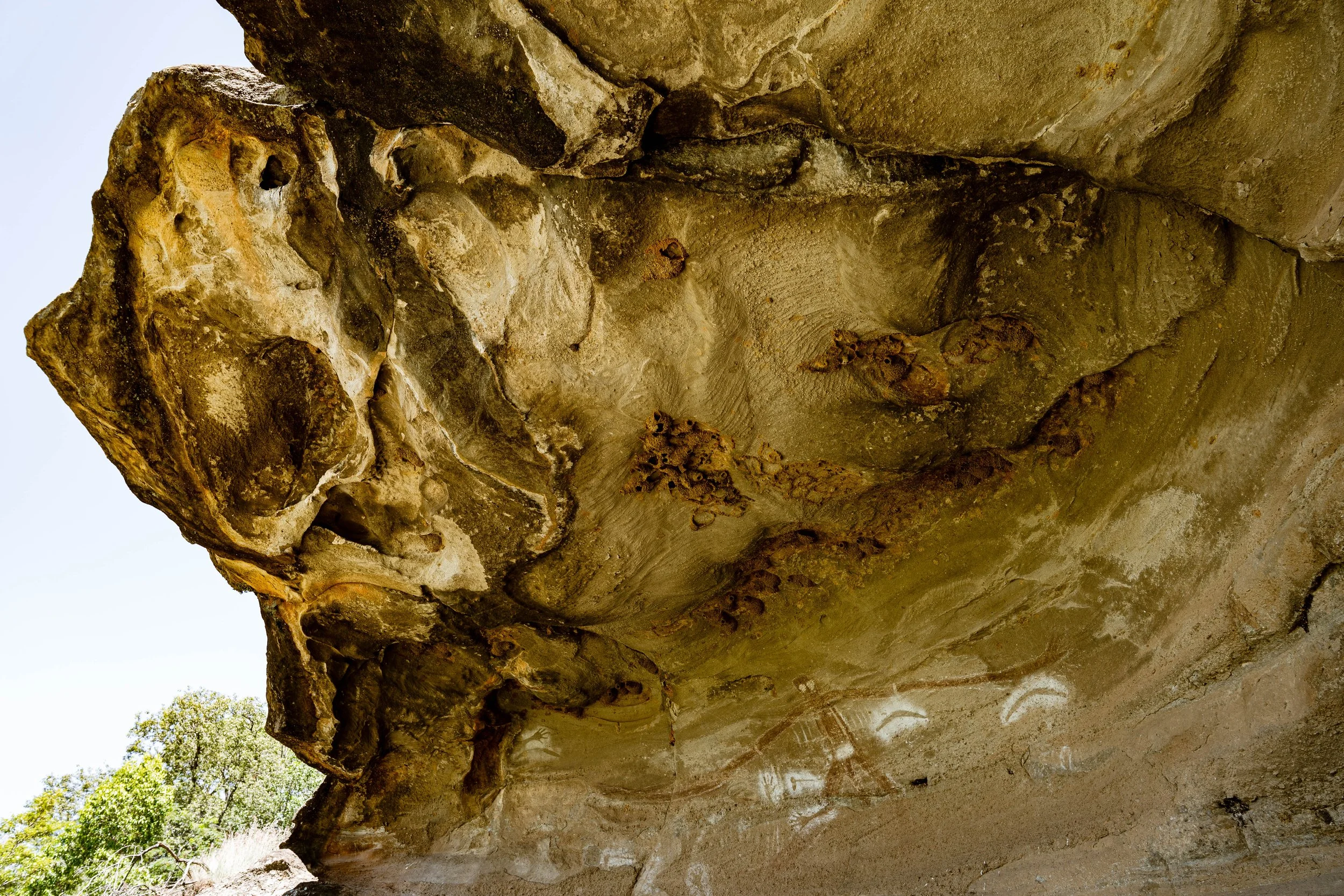
Baiame Cave is a heritage-listed cave and cultural site of the Wanaruah, Wonnarua People
The Wonnarua people have lived on the Country that became the Upper Hunter coalfields for tens of thousands of years. The Awabakal people hold Country across Newcastle and Lake Macquarie. The Worimi people are the Traditional Custodians of Port Stephens, the very coastline off which a 1,854 square kilometre offshore wind zone has now been declared. The Darkinjung people's Country extends south. Baiame Cave near Milbrodale, one of the most significant Aboriginal rock art sites in NSW, depicting the Creator Spirit at the heart of Dreaming traditions across eastern Australia, sits within what became coal country. The resource that built the industrial Hunter was known to its First Peoples long before it was loaded onto a ship.
Any honest account of the Hunter's identity has to carry that history forward. Not as a disclaimer, but as a foundation.
The cities that have done reinvention most credibly have been the ones willing to confront difficult histories alongside hopeful futures. For the Hunter, that means a Brand Hunter conversation that includes Wonnarua, Awabaka, Worimi and Darkinjung voices not at the margins but at the table, in the Hunter 2050 Foundation, in the Clean Energy Precinct planning, in the cultural and heritage programs that will determine what the region chooses to remember about itself.
The weight of the past, as this series has argued, is not a burden. But you have to carry all of it.
What it will take
The Bilbao Effect has been attempted, and failed to land, in dozens of cities that built the landmark without the governance. Pittsburgh's transformation took forty years and the sustained commitment of anchor institutions willing to orient themselves around a regional mission, not just their own interests. The Ruhr's IBA programme required a state government willing to fund, and a regional body willing to coordinate, over a decade.
None of that is glamorous. None of it fits in a brand campaign. But it is what works.
The Hunter has one structural advantage that Pittsburgh, Bilbao and the Ruhr did not: it can watch what they did, understand what took them by surprise, and choose a more deliberate path. The geography is forgiving. The same land that held the steelworks is now a waterfront precinct. The same island that loads coal ships is being redesigned for clean energy. The human capital is here. The institutional pieces exist, if not yet fully connected.
The question is not whether the Hunter has what it needs to build a new identity. It is whether the people and institutions with the capacity to name that identity will decide, together, that now is the time.
Other regions waited until the crisis forced the conversation. The Hunter does not have to.
This is the fourth piece in a series on the Hunter Region's economic and cultural transition. The series begins with The Weight of the Past.
Andrea is a Board Member of Hunter iF and the founder of Signal & Orbit, a fractional CMO and go-to-market consultancy based in Lake Macquarie. She has spent 15 years working across journalism, media and B2B marketing strategy in Germany and Australia.